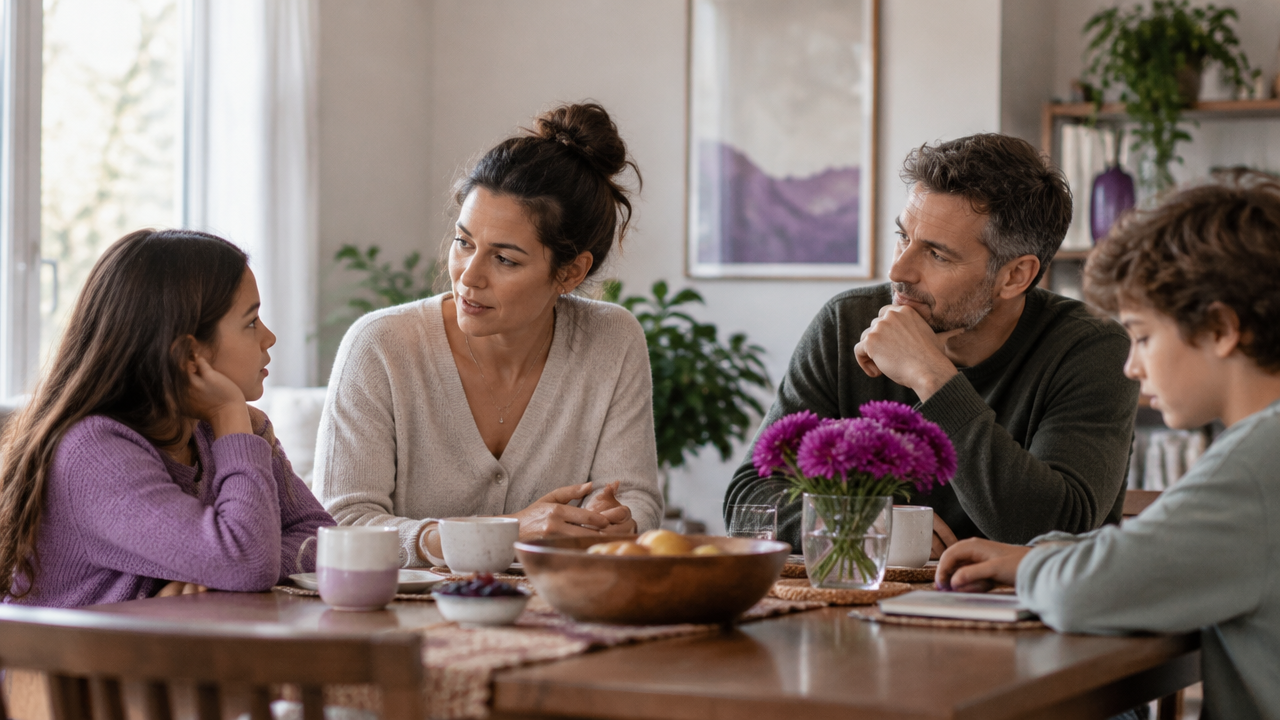

We often think of inheritance as money, traits, or family stories. Yet many of the strongest legacies are emotional. They live in tone of voice, silence at dinner, the way we react to tears, and the habits we repeat without planning to. Emotional inheritance is not only about big family dramas. It is often built in plain sight, inside daily routines.
Emotional inheritance is the passing of feeling patterns, reactions, and relational habits from one generation to another.
We see this when one person apologizes too fast, another shuts down during conflict, and a child learns that certain feelings are safe while others are not. A family may say, “We are just like this.” But when we slow down, we often find a pattern with a history.
Research supports this view. A long-term intergenerational study on socio-emotional skills found that these skills are passed across generations, with strong links between mothers and children, and even links between grandmothers and grandchildren after parental factors were considered.
Why routines show the pattern
Big family events can hide what is really going on. People prepare. They perform. Routines are different. Breakfast, school drop-off, text messages, chores, bedtime, and holidays show us the emotional rules of the home.
In our experience, routines answer quiet questions such as:
Who is allowed to be upset?
Who has to stay strong?
Who repairs tension after conflict?
What feelings are ignored, mocked, or rushed?
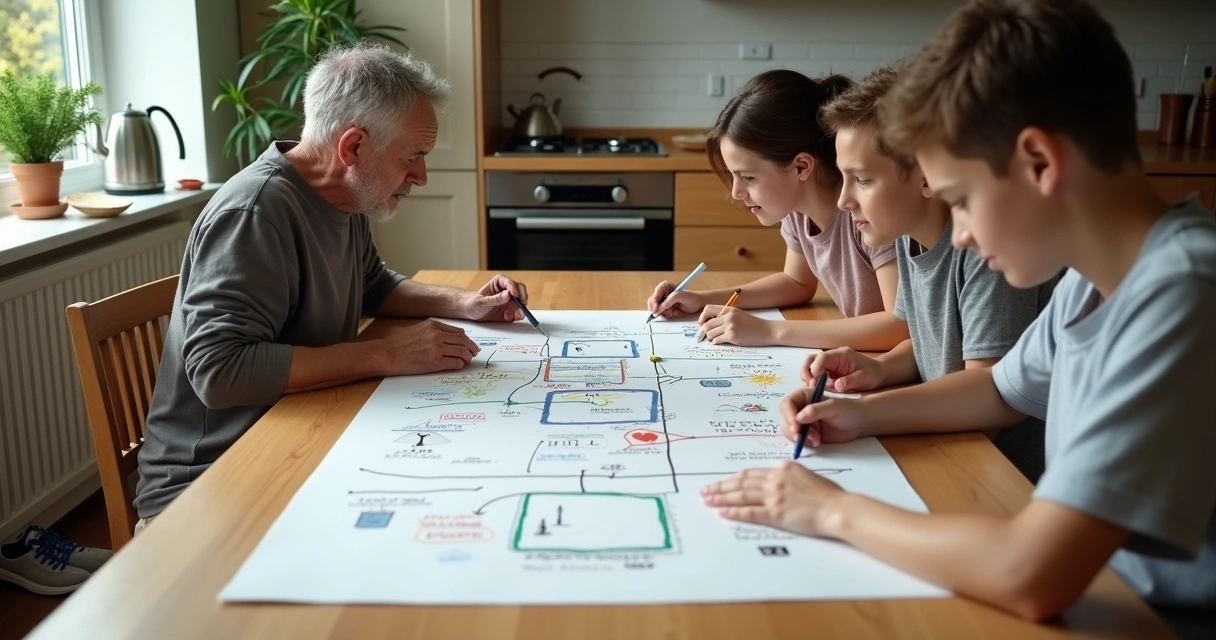
When we map routines, we stop guessing and start seeing patterns as they actually happen.
A 50-year review on family routines and rituals showed that consistent family routines are linked to better emotional regulation and social competence in children. This matters because routines do not only organize the day. They also teach the emotional climate of belonging.
Patterns hide in repetition.
What to observe first
We do not need to begin with blame. We begin with observation. Think of one ordinary week. Choose a few repeated moments and write down what tends to happen.
Good starting points include:
Morning rush and leaving the house
Meals and who speaks most or least
Responses to mistakes, mess, or lateness
How comfort is offered after sadness or fear
How anger appears, and who must absorb it
Bedtime and the tone that closes the day
One family we once reflected on had a familiar scene every night. The child stalled at bedtime. The father got rigid. The mother softened too much. After a week of notes, the issue was not bedtime alone. It was fear of conflict, inherited from older family dynamics where tension was avoided until it burst.
That is how mapping works. We stop naming only the event and begin naming the emotional script.
How to build an emotional map
We suggest a simple process. It is clear enough to follow, but open enough to reveal nuance.
Start with these five steps:
Pick three recurring routines from the week.
Write what happens before, during, and after each routine.
Name the main emotions present in each person.
Note the spoken rule and the hidden rule.
Ask where this pattern may have appeared in earlier generations.
For example, the spoken rule may be “We need to be respectful.” The hidden rule may be “Do not disagree with the loudest person.” That difference tells us a lot.
An emotional map becomes useful when it includes behavior, feeling, role, and family meaning.
It also helps to track roles. In many homes, one person calms everyone, one disappears, one becomes the problem, and one acts as the strong one. Roles can change, but they often repeat with surprising force.
Signals that point to inheritance
Not every family habit is inherited pain. Some are healthy and steady. Still, some signs suggest that a routine carries older emotional material.
Watch for these markers:
The reaction is much bigger than the event.
The same conflict appears with different people and settings.
Someone says, “This is how my mother or father was.”
There is guilt when a person tries to act differently.
One emotion is allowed, while another is denied.
Studies also connect emotional patterns with later relationships. Research on parents’ emotion dysregulation and sons’ later relationship conflict showed that a parent’s emotional dysregulation related to the child’s dysregulation, which then linked to conflict in later romantic life. What happens at home rarely stays only at home.
We also know that invalidation matters. Research on parents’ difficulty regulating emotion and invalidating adolescents’ feelings found links with stronger emotional and behavioral struggles in adolescents. If a child hears “you are too sensitive” often enough, that message can become part of identity.
How to read the family field without blaming
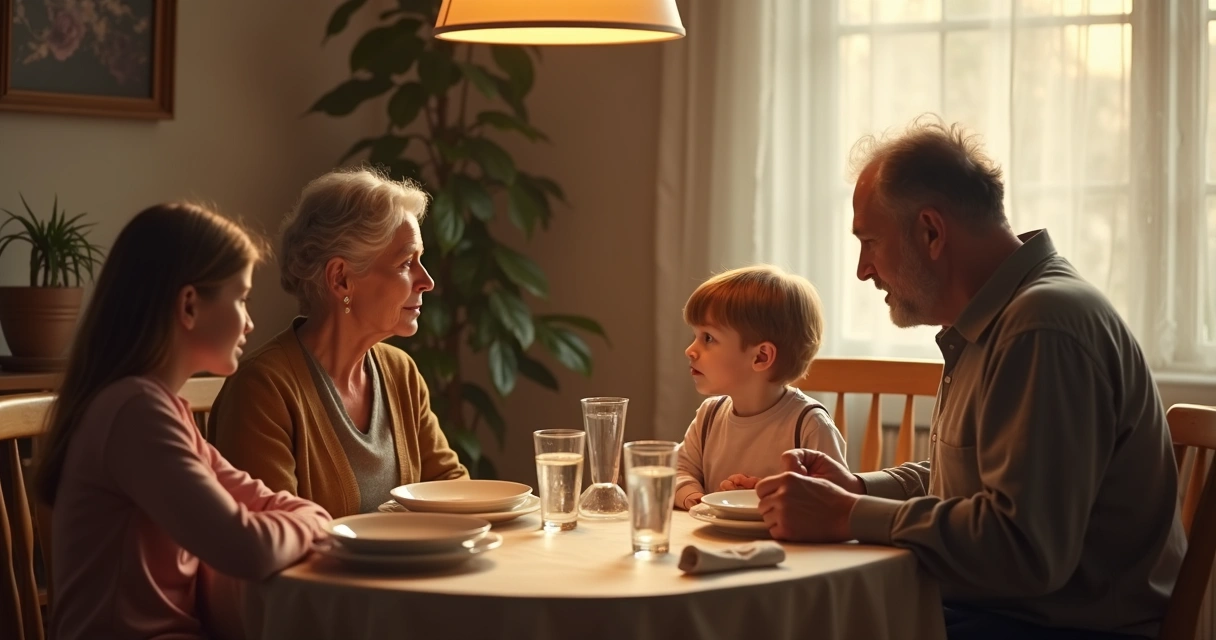
Mapping emotional inheritance is not a trial. It is a way to see what shaped us. If we turn the process into accusation, people defend themselves and the pattern stays hidden.
We prefer questions that open space:
What feeling was hard to express in this family?
Who had to adapt early?
What happened when someone needed comfort?
What loyalty may be active here?
Sometimes a family transmits conflict. Sometimes it transmits distance. A study on intergenerational ties found that emotional closeness, conflict, and ambivalence can pass between generations. This helps explain why some people repeat tension they say they hate, while others repeat distance they say they do not want.
Seeing is not blaming.
What can change after mapping
Once a pattern is visible, choice becomes more real. We can pause before repeating a tone, a silence, or a reaction. We can build a new routine with a different emotional message.
That may look like:
Making space for one feeling that used to be shut down
Changing how repair happens after conflict
Stopping the use of shame during correction
Giving one family member a new role
These changes may look small from the outside. They are not. A different response repeated over time becomes a different inheritance.
Conclusion
When we map emotional inheritance in everyday family routines, we begin to notice that the ordinary day is full of memory. Not only personal memory, but relational memory. The way we wake each other, correct each other, comfort each other, and go silent with each other can carry old family instructions.
Mapping does not trap us in the past. It helps us act with more awareness in the present.
We cannot change what shaped earlier generations. We can, however, become more honest about what is being passed on now. That honesty is where new family culture starts.
Frequently asked questions
What is emotional inheritance in families?
Emotional inheritance in families is the passing of emotional habits, coping styles, beliefs about feelings, and relational roles from one generation to another. It can appear in the way people handle anger, give comfort, avoid conflict, or respond to vulnerability.
How to identify emotional inheritance patterns?
We can identify these patterns by watching repeated family routines, noting strong reactions, and asking which emotions are welcomed or rejected. It also helps to compare present habits with stories or behaviors seen in parents and grandparents.
Why map emotional inheritance in routines?
Routines show emotional patterns in their most regular form. Meals, mornings, and conflict repair reveal hidden rules that may not appear in special events. Mapping them helps us see what is being repeated without awareness.
Can mapping improve family relationships?
Yes. When patterns become visible, people can respond with more care and less automatic reaction. This can improve communication, reduce blame, and support healthier ways of handling emotion inside the family.
Is it worth it to map emotions?
Yes, because emotional mapping turns vague discomfort into something we can name and work with. It helps us understand what belongs to the present moment and what may be part of a longer family pattern.