


We often hear about gratitude as a quiet, personal emotion or a fleeting thank you in passing. But what if, together, we treated gratitude not just as a feeling, but as a ritual? What if expressing it had the power to shift the very energy of the systems we live and work in?
Through our experience, we have seen that gratitude rituals can change the way energy moves, unlock hidden dynamics, and restore what we call systemic flow. Our relationships, organizations, and families are not simply collectives of separate individuals, they are living, breathing systems. When the flow within these systems becomes stagnant or blocked, frustration and stagnation often arise. Gratitude rituals help shift this reality, gently but powerfully, bringing renewal and connection.
Understanding systemic flow
Before talking about gratitude rituals, we need to look at what we mean by systemic flow. Every system, whether a couple, a family, a team, or even an entire organization, has a flow. This flow is the movement of energy, attention, and connection between its members. It reflects the complex dance of giving and receiving in human relationships.
When the systemic flow is healthy, we observe:
- Mutual support and clear communication
- Balanced exchange of effort and care
- A sense of belonging for all members
- Space for learning and growth
Blocked flow tends to show up as repeated conflicts, misunderstandings, or chronic dissatisfaction within the group. Sometimes, it looks like a person repeatedly giving or receiving without balance. Other times, it is the group that overlooks or underappreciates certain members. These disruptions don’t simply “fade away” and can echo over generations and cycles unless they are consciously addressed.
How gratitude rituals transform patterns
We have noticed in our work that gratitude rituals are not just polite gestures. Rituals, by definition, bring structure. They invite us to pause, recognize what is present, and direct our feeling of gratitude in a conscious way. This act can wake up parts of the system that have been ignored or taken for granted.
Gratitude rituals help restore systemic flow by acknowledging both the visible and invisible contributions in a system. This affirmation of value allows old patterns of withholding or resentment to soften. A simple ritual can act as a reset, shifting focus from what is missing to what is present and possible.
The core elements of gratitude rituals
What makes a gratitude ritual effective? We find these core elements play a big role:
- Intention: The group or individual agrees to pause and focus on gratitude, which opens more space for positive change than a mere spontaneous thank you.
- Recognition: Each person or element being honored is explicitly named or acknowledged for their contribution or presence.
- Reciprocity: There is a space for both giving and receiving, balancing the flow between all participants.
- Structure: The ritual repeats over time, whether daily, weekly, or seasonally, to reinforce new patterns.
These elements together support healthy boundaries and balance. A well-held gratitude ritual can shift a system from a narrative of lack to one of abundance and belonging.
Examples of gratitude rituals for restoring flow
Gratitude rituals can be adapted to almost any context, families, friendships, teams, and larger organizations. Here are some examples based on what we have seen work:
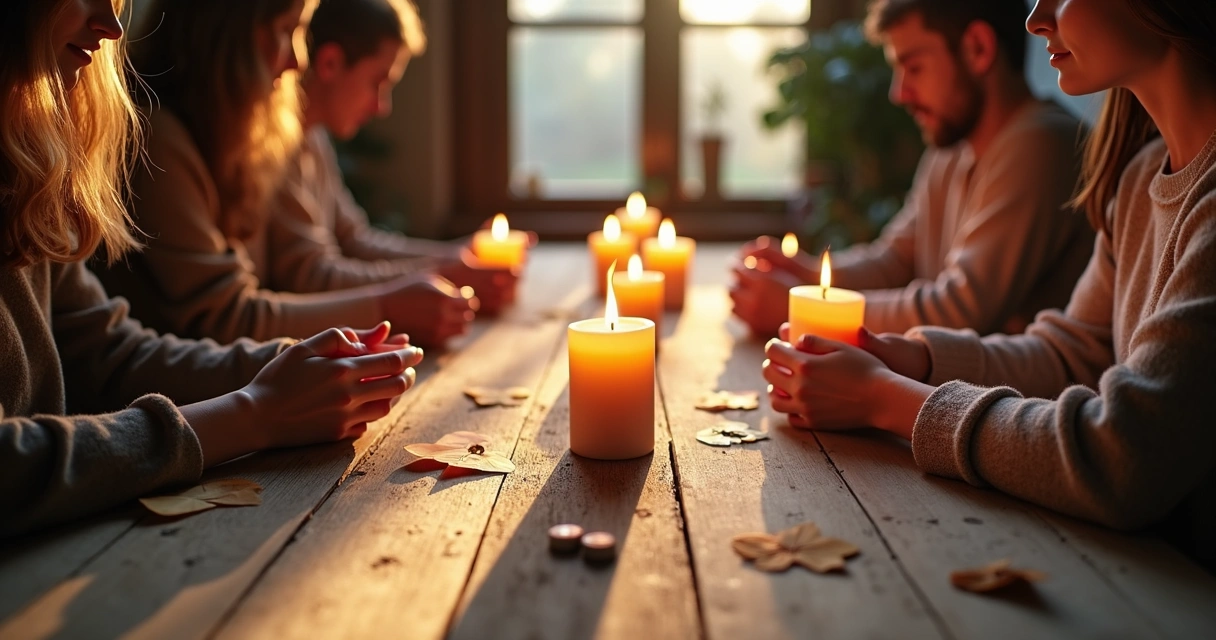
- Candle lighting or symbolic gestures: Each member lights a candle or places an item in a shared space while offering thanks to someone or something that has contributed, past or present.
- Gratitude circles: At the start or end of meetings, everyone shares one thing or person they are grateful for relating to their work or the group.
- Written notes: Setting aside time to write notes of appreciation and read them aloud (or leave them for others to find) to bring visibility to origins of support.
- Family rituals: Naming ancestors or parents before a meal as a sign of respect, or recounting one positive story about the family’s history.
- Personal reflection: A daily journal focusing on what is received from others, even if it is small.
Each of these rituals works because it brings a hidden or unspoken contribution into the light where it can be seen, felt, and included in the group story.

The systemic impact of gratitude rituals
Gratitude rituals do more than boost individual wellbeing. In our experience, we have seen several systemic effects, like:
- Restoring balance where there has been too much focus on complaints or what is missing
- Including previously overlooked people or contributions, strengthening a sense of belonging
- Soothing old tensions as gratitude softens resistance, gently bringing more flow to stuck relationships
- Renewing energy and creativity, as systems freed from old resentment reconnect with life and potential
Small rituals can open big doors.
The result is often a stronger, more resilient system, one where people feel valued and, in turn, are more willing to offer their gifts.
Why do gratitude rituals sometimes meet resistance?
We should be clear: not everyone welcomes gratitude rituals right away. For some, the idea may feel awkward or forced. At other times, systems carry longstanding pain or unspoken losses, making thanks feel out of place, or even painful.
When this happens, it helps to:
- Acknowledge what is difficult before moving to gratitude
- Begin with rituals that feel natural; forced gratitude does not restore flow
- Invite, rather than require, participation
When there is space for all emotions, even the difficult ones, gratitude rituals have a chance to work their quiet magic.
The importance of consistency
While a single ritual can create a shift, consistency tends to bring about deeper change. Repeating gratitude rituals over time helps to anchor new habits of seeing, valuing, and responding to others in healthier ways. This rhythm builds trust and safety in the system, setting the stage for ongoing restoration of flow.
Sustained rituals make gratitude a healthy habit, not just a rare event.
The role of gratitude rituals in personal and systemic maturity
Gratitude rituals are not magic spells. They do not erase all difficulties, but they do nurture maturity. As we witness the power of these simple practices, we see systems and individuals grow, able to look at both light and shadow, loss and gain, with open eyes and hearts.
We believe gratitude rituals support the integration of stories and open the door to new choices and possibilities. When systemic flow is restored, we do not just feel better as individuals. We actually co-create spaces of reconciliation, learning, and shared responsibility.
Conclusion: Gratitude as a daily practice for healthy systems
We have seen again and again that gratitude rituals are more than a gesture. They weave connection, balance gratitude with healthy boundaries, and invite old or hidden contributions to be witnessed and included. By regularly honoring what is present and received, we nourish systemic flow in our relationships, families, and organizations. Even a simple ritual, done with sincerity and respect, can bring a wave of renewal. When gratitude becomes a shared practice, we make room for deeper belonging and lasting change. And in systems, as in life, this makes all the difference.
Frequently asked questions
What is a gratitude ritual?
A gratitude ritual is a structured practice where individuals or groups intentionally express appreciation for contributions, support, or presence within a system. This can involve spoken words, symbolic gestures, written notes, or shared moments focused on acknowledging value and connection.
How do gratitude rituals restore flow?
Gratitude rituals restore flow by bringing attention to what is working, honoring contributions, and balancing giving and receiving. This helps to dissolve blockages like resentment or exclusion, enabling energy and connection to move more freely within the system.
Are gratitude rituals effective for groups?
Yes, gratitude rituals are especially effective in group settings. They create shared moments of recognition, build trust, and reinforce a sense of belonging, often resulting in improved relationships and a more resilient group dynamic.
How often should I practice gratitude rituals?
Practicing gratitude rituals regularly, for example, daily, weekly, or at the close of group meetings, helps build lasting habits of recognition and balance. The best frequency is the one that feels authentic and sustainable for those involved.
Can gratitude rituals improve my wellbeing?
Research and experience suggest that gratitude rituals can boost individual wellbeing by increasing positive emotions, resilience, and overall satisfaction. In restoring systemic flow, they also contribute to healthier, more supportive relationships.