

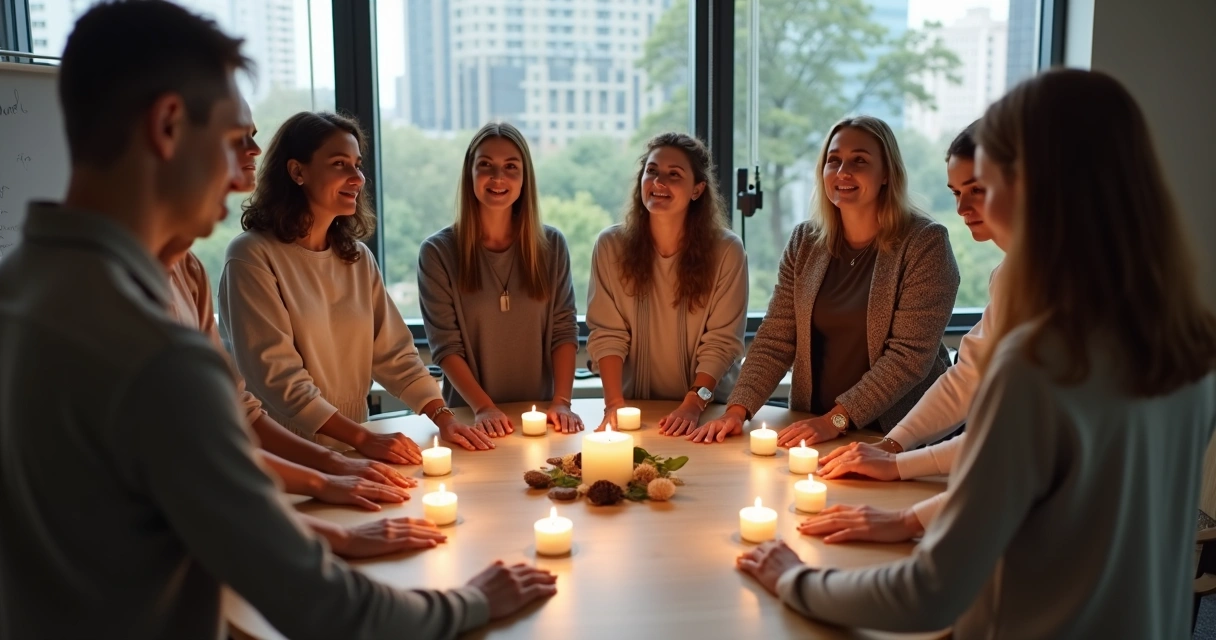
We have all witnessed those moments when a team, group, or family becomes something greater than the sum of its parts. Sometimes, these moments arise naturally, sparked by shared laughter after overcoming a challenge or in the respectful silence that follows a decision. Other times, they are cultivated with intent, through repeated group actions that remind everyone of their place, power, and duty. This is the world of group rituals and their quiet, yet lasting, impact on shared responsibility.
What makes a group ritual?
Group rituals are much more than habit or routine. In our experience, they are conscious, repeated actions carried out by a group, often with symbolic meaning or structure. These might include regular check-in circles, weekly planning huddles, opening or closing ceremonies, or even traditions passed down at family gatherings.
A ritual has three qualities: it is shared, it is intentional, and it is repeated over time.
Unlike spontaneous gatherings or the habits that individuals bring into a group, rituals stand out for their power to focus attention, guide behavior, and connect personal meaning to collective goals. Through these mechanisms, rituals do not just strengthen routines—they build shared responsibility.
Rituals transform routine into purpose.
Why shared responsibility matters
Responsibility rarely grows in a vacuum. When groups function well, members share not just the work but the ownership of what happens, both good and bad. We have seen again and again that shared responsibility is at the heart of real collaboration, trust, and healthy boundaries.
Shared responsibility gives rise to trust. It reduces finger-pointing and the temptation to avoid difficult conversations. Every meaningful team or group challenge—from launching a new project to walking through conflict—benefits when responsibility is not a lonely burden, but a lived, collective value.
When everyone contributes, everyone belongs.
How rituals strengthen responsibility in groups
Let’s talk about the specific ways rituals move a group from simple cooperation to shared responsibility. In our view, this happens through several key processes:
- Setting clear expectations: Rituals put what matters on the table. A Monday check-in invites everyone to share intentions for the week, making commitments visible and agreed upon.
- Encouraging presence: When rituals ask for participation—like a moment of silence, a roll-call, or a group reflection—absenteeism or withdrawal becomes a conscious act, not a silent drift. People step in, or step out, declaratively.
- Strengthening trust: Because rituals repeat, they make the group space predictable and safe, allowing members to let down superficial guards and speak both their successes and their challenges.
- Building shared memory: Stories and traditions emerge over time, binding the group through narrative. “Remember when we faced that obstacle together?” These memories reinforce a sense of mutual stewardship of the group’s path.
- Supporting accountability: When a ritual calls for each person to name a commitment—and the group returns to those commitments next time—it becomes much more difficult to let tasks slide or avoid responsibility.
Through these mechanisms, rituals function not only as tools for coordination, but as anchors for commitment and visibility.

When do rituals work best?
We have noticed group rituals are most powerful when they are tailored to context and kept meaningful to those who participate. A team can quickly create cynicism when rituals are forced or superficial, or when nobody really believes in the purpose. Here are a few guidelines that in our view support lasting, effective group rituals:
- Inviting participation in the design. A ritual works when people help shape its form and meaning. Ask the group: “What do we want to mark or reinforce together?”
- Keeping it genuine. Drop anything that feels empty of purpose. If a ritual no longer brings value, let go or adapt.
- Balancing structure and flexibility. Some consistency is good, but it’s also necessary to respond to context. Rituals can evolve with group needs.
- Being mindful of inclusion. Not everyone resonates with the same symbols or actions. Meaningful rituals are attentive to diverse backgrounds and ways of relating.
Rituals do best when they grow with the people, not just the plan.
Simple rituals that foster responsibility
Here are a few real-world examples that we have seen strengthen responsibility, trust, or ownership in very different group settings:
- Closing rounds: At the end of each meeting, invite everyone to share one takeaway or commitment. This simple practice brings closure and ensures that action is distributed.
- Shared celebration: Mark project milestones with a group acknowledgment, telling stories of what each person contributed. Shared recognition promotes ownership in both success and process.
- Accountability circles: Once a week, team members share what went well and what didn’t, without blame. Others listen first, then ask what support is needed. Consistent practice leads to honest, responsible dialogue.
- Ritualized empathy moments: Create a space for one member to name a challenge, with others reflecting what they heard. This ritual grows both personal courage and group compassion.
- Family gratitude sharing: Before meals or at the end of a day, invite family members to share something they are grateful for in each other. Even young children can join, bringing out a sense of contribution and belonging.

Why do we sometimes resist rituals?
It is common for people to resist rituals, seeing them as old-fashioned or unnecessary. In our experience, resistance often signals a need for autonomy or a mismatch between the ritual and current group needs. Sometimes, a ritual can feel like an obligation rather than a choice.
The answer is not to abandon rituals, but to make them conscious, useful, and genuinely shared.
When rituals move from routine to intention, from “have to” into “want to,” they open surprising doors to communication and care.
Conclusion
Shared responsibility is not just about dividing work—it is about aligning intention, honoring mutual commitment, and caring for the whole group. Well-crafted rituals offer a practical pathway to these outcomes. They ground us in purpose, guide our actions, and remind us that belonging and ownership are built, not simply assumed.
When we create space for group rituals, we make room for growth, choice, and deeper responsibility—together.
Frequently asked questions about group rituals and responsibility
What are group rituals for responsibility?
Group rituals for responsibility are actions that groups repeat together to reinforce commitment, shared values, and ownership of outcomes. They are designed to help everyone take part in decision-making and follow through on shared agreements.
How do group rituals build trust?
Group rituals build trust by making behavior predictable, involving everyone equally, and providing a space where people know their voices and actions matter. Over time, this encourages honesty, openness, and the belief that everyone will support one another.
How to create effective group rituals?
To create effective group rituals, invite input from all group members, clarify the shared purpose, keep the structure simple, and allow the ritual to evolve as needs change. Rituals that feel personal and meaningful produce stronger participation.
Is it worth doing group rituals?
Yes, group rituals are often worth doing. When chosen well and kept meaningful, they support trust, create a sense of belonging, and encourage everyone to take personal and shared responsibility for what happens in the group.
What are examples of group rituals?
Examples of group rituals include weekly check-in circles, shared meal blessings, ending every meeting with a round of commitments, celebrating group achievements, and regular sessions where everyone reflects on challenges and support needs. These practices strengthen both unity and accountability.